| Home |
Strange Wonderful Things Rare and exotic plants |
 |
|---|
Pink Bomarea
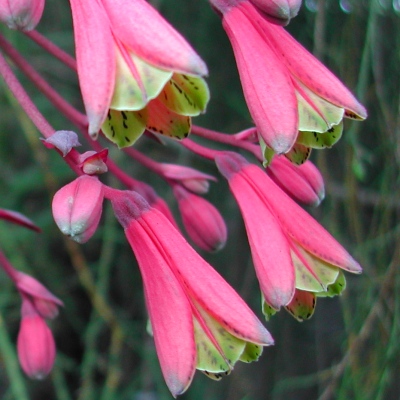
Bomarea edulis
Soil -- Use a well draining
mix. I use a mix of 1 part
coir fiber


Transplanting -- Transplant gently to a 1-2 gallon container, which will hold it for a few months. Do not compact the soil after transplanting. Water it in but do not feed until the plant puts out new growth. By the second season it should be moved to a 5-10 gallon pot. If you plan on exposing the plant to frost, bury the roots 6 inch under the soil, otherwise 3-4 inches is fine.
Watering -- Bomarea likes soil that's evenly moist, but not soggy.
Light -- Bomarea comes from the forests, where it gets tree-filtered sun most of the time. It should be protected from prolonged sun exposure, except in the morning or late afternoon. Filtered sun is best. It does not need a whole lot of sun to be happy, just bright light.
Climate -- Bomarea prefers temperatures between 40 and 85 degrees. The roots can probably handle temps in the low 20s, but the leaves will perish from frost. I recommend protecting the plant from all frost the first winter so it can become established.
It warmer climates, don't plant it where heat can collect, like against a sunny wall. Mulch the plant to keep the roots cool and moist. Shade the pot to keep it cool, or at least avoid using a black pot, which can overheat the roots.
Fertilizing -- During periods of active growth, give feedings with a general-purpose fertilizer that contains micronutrients (I use this).
It's normal for an older shoot to occasionally turn yellow and die, but if it seems excessive, it could be from not enough fertilizer (nitrogen) or under-watering.
Up and away -- Bomarea likes to climb, so give it something to play on, like a trellis, fence, or another plant. Under 1/2 inch is the preferred thickness, so it can twine itself around easier. The flowers appear from the growing tips, do don't prune your plant (unless a shoot dies back), but you can wrap any long strands around your trellis.
Dormancy -- This Bomarea tends to die back at least partially in the winter. You may snip off any dead shoots, however don't dig up the tubers, as this may stress the plant. The plant doesn't reproduce by tubers, so don't divide them.
Pests to watch for -- Snails and slugs can be a problem in prone areas. Watch for aphids or other bugs, depending on your area.
Feel free to email if you have any questions.
Have fun growing it!
Jeff
Strange Wonderful Things
| Home |
Strange Wonderful Things Rare and exotic plants |
|
|---|---|---|
| Entire site Copyright 2003-2025 by Strange Wonderful Things, except as noted | ||