Strange Wonderful Things
Rare and exotic plants
| Home |
Strange Wonderful Things Rare and exotic plants |
|
|---|
|
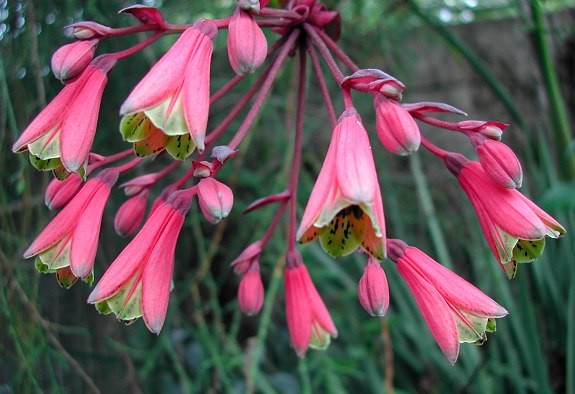
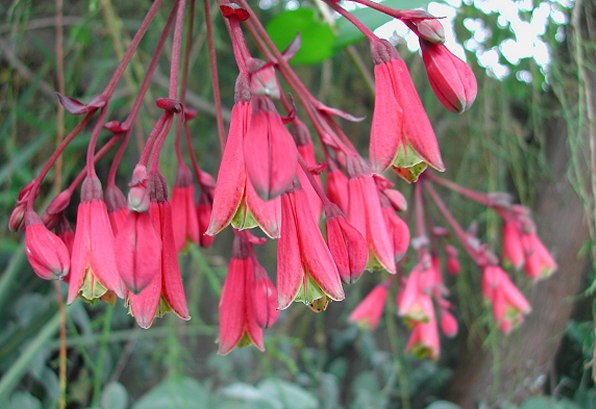
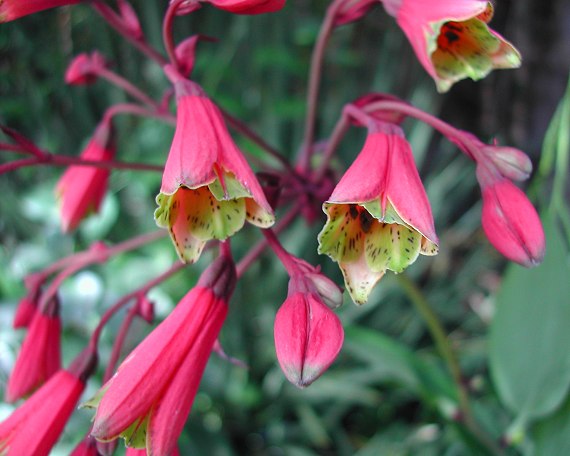
Pretty in pink! The Pink Bomarea (Bomarea edulis) is a gorgeous vine that you're not likely to find in the nurseries. Bomareas are related to Alstroemeria, the "Peruvian Lily" seen in floral arrangements. The showy flower sprays of the Pink Bomarea appear throughout most of the year, with their unusual color combination of bright pink and chartreuse. It is rare in cultivation, and rarely seen for sale.
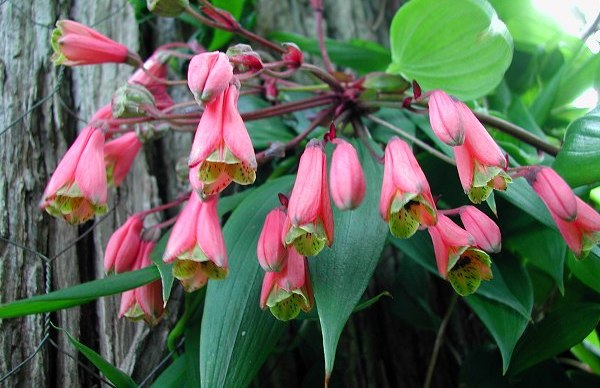
The Pink Bomarea is a tuberous vine with attractive, twining shoots. The plant climbs about 10 feet tall (3 meters), although it may be kept shorter. The flower clusters appear on the tips of the shoots from about May through December here in San Francisco. If grown indoors, it can bloom all year long! Each cluster can have up to 25 blooms, which hummingbirds like to visit. The species name "edulis" refers to the edible nature of the tuber, which reportedly taste like potatoes. Personally i grow this vine for the flowers!
The Pink Bomarea is native to Central and South America. Unlike most Bomareas, which come from cool highlands and resent heat, this one comes from warmer, lower elevations, so it might be able to tolerate warmer climates like Florida. The tubers are probably hardy to the low 20s (-5°C), but i recommend protecting the plant from frost for at least the first year. Adult plants are easily kept in a 5 gallon (20 liter) pot. It is often evergreen when kept above 40 degrees F (5°C).
Filtered sun or morning sun is preferred. Protect it from strong afternoon sun. It does not need a lot of sun to thrive - just bright light. It likes well-draining soil that is kept moist. Adult plants should be given something to twine around, like a 6-foot (2 meter) trellis. If the shoots grow too long, simply wrap them down and around the trellis; don't cut them, since they flower from the tips. This is vigorous, fast-growing species that flowers at a young age. More tips on growing this plant are here.
|
| Home |
Strange Wonderful Things Rare and exotic plants |
|
|---|---|---|
| Entire site Copyright 2003-2025 by Strange Wonderful Things, except as noted | ||