| Home |
Strange Wonderful Things Rare and exotic plants |
 |
|---|
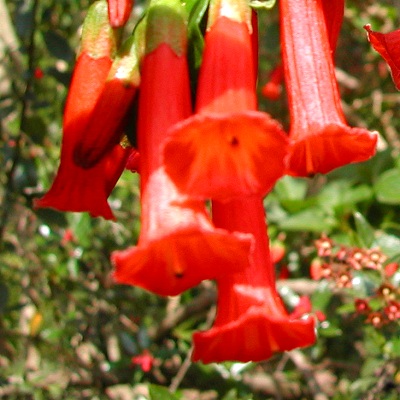
Red Iochroma
Growing tips
Getting started -- Start your plant in bright shade, out of direct sun. I recommend starting your plant in a pot that's about 50% wider than its current pot.
Soil -- Iochroma likes well-draining soil.
Use a typical, well-draining soil mix, such as 2 parts high-quality potting soil
to 1 part
perlite
Transplant gently to avoid damaging the roots. Give no direct sun the first week after repotting. After that, slowly move it from shade to sun over a period of several weeks, watching for possible burning. You may need to limit the sun exposure until it's grown a bit larger.
Watering -- Aim to keep the soil evenly moist most of the time. Don't allow the soil to dry out completely, but avoid keeping it constantly soggy.
Sunlight & climate -- Established plants like part sun, although full sun can work in cooler conditions. In warmer climates, you may need to give it some afternoon shade.
I recommend protecting the plant from freezing temperatures. It can drop its leaves from light frosts, but reportedly can come back from the roots on mature plants after freezes of 25°F (-4°C) if mulched well.
Iochroma grows best with cool nights (below around 65°F), and daytime temperatures of around 55-85°F. In hotter conditions, keep the pot shaded, perhaps by placing it inside a second pot made of clay.
Over about 40% humidity is best. If your plant seems to suffer from low humidity indoors, consider using an ultrasonic room humidifier, sold at home improvement stores and some thrift shops.
Planting out -- Once it is around 18 inches tall, it may be planted in the ground in suitable climates. Or repot it to a bigger pot whenever necessary.
Fertilizing -- Feed about every 2-3 months during the growing season with an all-purpose fertilizer that contains micronutrients, following the dosage on the package.
It's normal for a few of the older leaves to
turn yellow and die throughout the year, but if it seems excessive, the soil may
be too dry down in the root zone. If you're unsure if the roots are moist
enough, you can use a
moisture meter probe
Pruning -- Larger plants may be pruned to keep them shapely. Like with most bushes, removing lower branches encourages upward growth from the higher stems, while cutting back the tallest stem will encourage lower branching and bushiness. Avoid removing too much at one time.
Pests to watch for -- Spider mites (tiny "dots" and webbing under the leaves), aphids, whitefly. Try using insecticidal soap spray before using stronger remedies, since some may harm the plant.
If you have any questions or problems, feel free to contact me.
Enjoy your plant!
- Jeff
Strange Wonderful Things
| Home |
Strange Wonderful Things Rare and exotic plants |
|
|---|---|---|
| Entire site Copyright 2003-2025 by Strange Wonderful Things, except as noted | ||