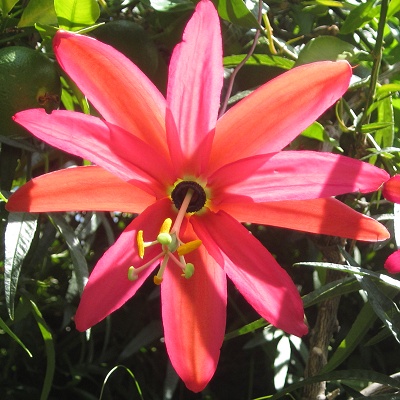
Passiflora parritae x antioquiensis
Growing tips
Getting started -- It's normal for this plant to drop a few leaves during shipping. Once it is established, it will quickly grow new ones. The first week, keep it in moderate temperatures in a bright spot with no direct sun. Pot size -- You can transfer it to a pot about 50% wider than its currently in. Transplant carefully to avoid breaking apart the soil ball. Soil -- Like most Passiflora, this one likes moist, fertile soil that drains well. A typical soil mix is 2 parts potting soil to 1 part perlite or coarse horticultural sand. Watering -- Aim to keep the soil evenly moist most of the time, but not constantly saturated. Light -- Established plants like about a half day of sun. But start your plant in filtered light and increase the sun a little each week over 2-3 months, watching for possible burning or wilting. In warmer climates, give it some protection from strong sun. Temperature & humidity -- This Passiflora does best between about 45 and 80 degrees, with cool nights. Mature plants reportedly can survive brief, light frosts, but i recommend protecting it from all frost, especially while young. I'm not sure how much heat it can tolerate, but if it is like some related species, it may drop its flowers if temperatures rise above 85 degrees. In warmer climates, keep the pot shaded, perhaps by placing it inside a second pot made of clay. Indoors, between about 40 and 80% humidity is best. This species flowers best with cooler nights, so if you grow it indoors in a warmer part of the country, try to lower the temps below 64 degrees at night when the plant nears maturity. Trellising -- While it's young, give it small trellis or similar structure to climb on. When it's larger, you can send it up an arbor or pergola, or along wires. The shoots can grow at least 12 feet long. If any stems grow too long for your space, simply turn them and send them in another direction.. although you can prune them shorter if necessary. Fertilizing -- It has average fertilizer needs. About every 3 months, give it an all-purpose fertilizer that contains micronutrients, following the dosage on the package. Flowering and fruiting -- If you want fruit, and don't have hummingbirds nearby, pollinate the flowers manually using a small brush, or your finger. You can create new hybrids by cross-pollinating it with other related Passifloras in the Tacsonia section, like luzmarina, or cross it back to parritae or antioquiensis. Pests to watch for -- spider mites (tiny "dots" under the leaves). Watch for other pests that can affect your other plants. If you have questions, feel free to contact me. Have fun growing it! - Jeff Strange Wonderful Things
|
|||||||||