Strange Wonderful Things
Rare and exotic plants
| Home |
Strange Wonderful Things Rare and exotic plants |
|
|---|
|
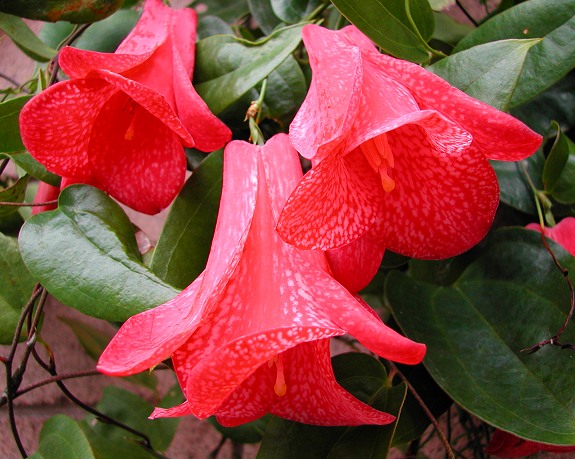
These are my two favorite varieties of Lapageria rosea - the Chilean Bellflower. I crossed the two varieties and am offering the seeds of that cross in this auction. The pollen plant, shown above, is an extremely rare picotee form called 'Collinge'. The mother plant, directly below, is the incredibly gorgeous 'Mission Lace' variety. What the seedlings of this cross will look like is anyone's guess, but they definitely should be interesting!
The 'Collinge' form (also called 'Dr. Bullock') is crisp white tipped with red along the petals, and has a light red mottled pattern. The blooms almost looked like they were dipped in red paint. The blooms are slightly smaller than average, however they more than make up for it with their terrific pattern. The 'Mission Lace' cultivar is bright pink with a heavily mottled pattern of white. The flowers are very large and heavy, and appear in large numbers throughout much of the year. The hybrid of these two forms will probably be variable, and i wouldn't expect the seedlings to look identical to either of the parents, or to each other. The good news is there is no such thing as an ugly Lapageria!
Lapageria comes from the cool mountains of Chile, and grows best between 35 and 85 degrees F. It can tolerate several degrees of frost if given overhead protection. It may not thrive in very warm or dry areas. It can be grown indoors, provided that the air isn't dry (over 40% humidity is recommended). It should be given something to twine itself around, like a trellis. The Chilean Bellflower has a long flowering season, from early spring through late fall.
Since it grows in the forests, it prefers tree-filtered sun. Shade it from prolonged direct sun, unless it's early morning sun. It prefers moist, slightly acidic soil that's well-draining and low in lime. If your tap water is high in minerals, it's best to use rainwater or bottled water. Lapageria is slow-growing the first year, so careful not to overfeed it. If you can provide the right conditions, you'll find this is an easy and long-lived vine. For detailed growing tips about this plant, click here.
|
| Home |
Strange Wonderful Things Rare and exotic plants |
|
|---|---|---|
| Entire site Copyright 2003-2025 by Strange Wonderful Things, except as noted | ||