Germinating the seeds
If you have germinated other Begonias before (not tropical, terrarium Begonias), you may use the same technique that worked for you. The tips below reflect what has worked for me, although other methods can certainly work. Getting started -- Plant your seeds when you receive them for best results. Use small pots or cups that are 2-4 inches (5-10 cm) tall. The pots should have drainage holes. Use well-draining soil.
I use a mix of 1 part
coir fiber The seeds are tiny, so work in a well-lit area. Fill the pots with soil and sprinkle several seeds evenly across the surface of each pot. An easy way to pick up the seeds is by breathing on your finger tip to lightly moisten it, then dabbing the seeds with it. If you have
long-fibered sphagnum moss For the next few weeks, ensure that the soil surface never dries out. You can maintain high humidity by enclosing the pots in a plastic container or bag - just leave it open a crack to let in fresh air. Once or twice a day, drip a few drops of water on the surface to keep it moist. The seeds germinate well at about 65-77 degrees F (18-25°C). I don't have experience germinating them outside this temperature
range. I recommend placing a
minimum/maximum thermometer Place the containers in a bright spot out of direct sun. An LED or fluorescent bulb kept 4 inches (10 cm) away provides the right amount of light (See: "Growing indoors with LED lights"). They tend to start sprouting within 3 weeks, but can sometimes take longer to start, especially at cooler temperatures. Continue dripping water on the soil surface after they sprout, since young seedlings have a small root system. When the seedlings are a month old, you may carefully pull them and transplant them, however i recommend simply cutting off any slower ones, and leaving 1 strong seedling in each pot. Fertilizing -- The first 2
months, feed weekly
with a small amount of dilute (1/8 strength) liquid fertilizer.
Hydroponic fertilizer
is ideal for seedlings, because it is easily absorbed and contains all essential
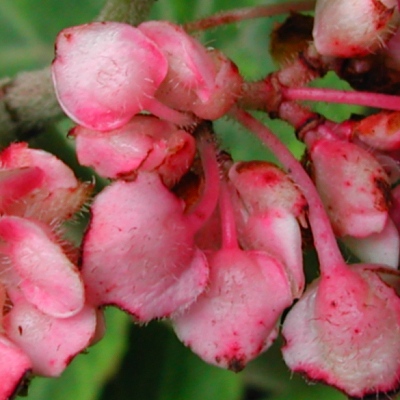
nutrients. After 2 months, you may switch to a granular fertilizer On older plants, it's normal for an older leaf to occasionally turn yellow and drop, but if it seems excessive, the soil may be too dry down in the root zone, or the plant may need more nitrogen fertilizer. Watering -- Once the seedlings are a month old, you may stop keeping the soil surface moist at all times. Aim to keep the rest of the soil evenly moist (but not soggy). Lighting -- The plant likes filtered sun or bright shade + morning sun. Protect it from strong afternoon sun. Transplanting -- When the seedlings are 2 months old, repot to a larger container about 1 quart (1 liter) in size. Water the soil before repotting, to keep the soil ball from breaking apart, which can damage the roots. Protect from direct sun the first week after repotting. Climate -- Begonia fusca comes from mid-elevations in Mexico, where the climate is mild all year. It has handled temperatures in the mid-80s (30°C) - use caution in warmer temperatures. It reportedly can re-sprout from the roots in Zone 9, but i recommend protecting it from freezing temperatures. Over about 40-45% humidity is best. If your plants seem to suffer from low humidity indoors, consider using an ultrasonic humidifier, sold at home improvement stores and some thrift shops. If you have any questions or problems, please contact me. Have fun growing them! - Jeff Strange Wonderful Things
|
|||||||||
 to 1 part
 (use small- or medium-size perlite, not large chunks). An alternate mix is 2 parts
quality potting soil
(use small- or medium-size perlite, not large chunks). An alternate mix is 2 parts
quality potting soil to 1 part perlite.
 , sprinkle
a small amount over the
surface. This helps retain
moisture around the seeds while allowing light to reach them, which aids
germination. The amount of moss to use is shown in
, sprinkle
a small amount over the
surface. This helps retain
moisture around the seeds while allowing light to reach them, which aids
germination. The amount of moss to use is shown in
 near the pots, especially if using a heating mat.
 that contains micronutrients (I use