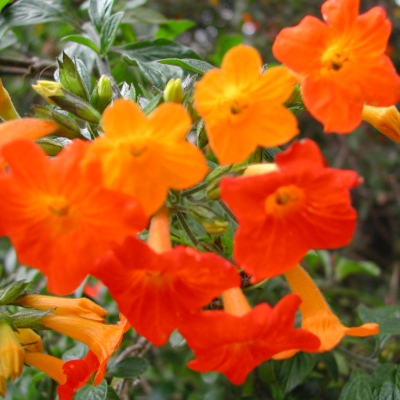
Marmalade Bush
Germinating the seeds
Plant your seeds when received for best results
Getting started -- Use small pots or cups with drainage holes. Fill with a well-draining soil mix. A typical mix is potting soil mixed with perlite in a 2 to 1 ratio. An alternate mix is equal parts of perlite and coir fiber, with some slow-release fertilizer mixed in. Water the soil until evenly moist, then sprinkle 2-3 seeds on top of each pot. Next sprinkle a very thin layer over them, about 1/8 inch (3mm) thick. The purpose is to keep the seeds moist while allowing light to reach them, which helps germination. Place the pots in a bright spot out of direct sunlight. The seeds germinate well between 65 and 74 degrees F (18-24°C). I don't know how they will do outside that temperature range. I recommend placing a minimum/maximum thermometer near the pots. They should begin sprouting after 3-4 weeks, and continue for another month. Keep giving them giving bright light with protection from direct sun. A fluorescent bulb kept 4 inches (10 cm) away provides the right amount of light. After 1-2 months, you may give them some direct sun, but shade them from strong afternoon sun until they are 4 months old. Watering -- They prefer soil that's consistently moist (but not soggy). Don't allow the soil to dry out completely. You may use a moisture meter probe to monitor the moisture level down in the root zone. They are sold garden shops and some hardware stores for about $5. Transplanting -- Repot to bigger containers after about 2 months. Transplant gently to avoid damaging the roots. Water the soil before repotting, to keep the soil ball from breaking apart, which can damage the roots. Climate - The Marmalade Bush can probably take only a light, brief frost, so it needs protection from all frost. I don't know how much heat it can handle. If it shows signs of heat stress, give it shade during the warmest part of the day. It grows well in part-sun. You may grow your plant indoors in a sunny spot or under bright horticultural lamps. Fertilizing -- Feed about every 2 months while in active growth with a slow-release, pelleted or organic fertilizer. If your potting soil contains fertilizer (check the label), your seedlings shouldn't need feeding the first 3 weeks. It's normal for some of the older leaves to turn yellow and drop throughout the year, but if it seems excessive, it could be from not enough fertilizer, particularly nitrogen. It could also be from overly dry soil. Pruning & shaping -- Older plants may be pruned to a variety of shapes, or you may tie the plant along a trellis or over an arbor. If you want the plant to spill over a wall or hanging planter, trim away branches that are growing straight up. If you prefer an upright growth habit, trim back any outward-growing branches. Avoid removing too many branches at a time. Bugs to watch for -- Spider mites (tiny "dots" under the leaves), Aphids (green ones are hard to see), white mealy bugs, and scale (brown discs on the stem - hard to see!). If you have any questions or problems, please email me. Enjoy your plants! - Jeff Strange Wonderful Things
|
|||||||||