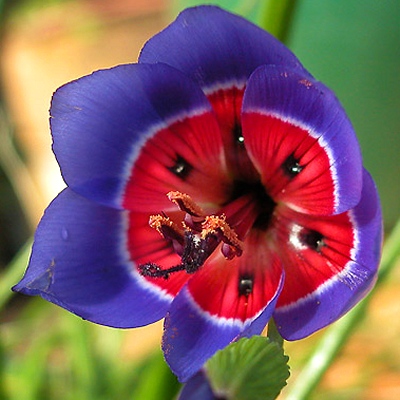
"Wine Cup"
Planting the seeds This species goes dormant in the summer, so the seeds are normally planted in late-summer or autumn, when temperatures are cooler (September/October in the northern hemisphere, March/April in the southern hemisphere). You may plant the seeds at other times of the year if you can keep them within the temperature range of 45-75° F (7-23°C). If planted at other times besides autumn, the seedlings might not go dormant the first summer, which is ok. If you store your seeds until autumn, keep them in the refrigerator. Pot size -- You may plant them in a single pot, or in multiple pots. The pot(s) should be 3-4 inches tall (7-10 cm). Space the seeds about 1 inch (2.5 cm) from each other and the sides of the pot. In warmer climates, it's best to use slightly larger pots made of clay. Either way, use pots with drainage holes. Soil -- Geissorhiza does best in sandy soil. A typical mix is 1 part potting soil to 2 parts coarse horticultural sand or perlite (fine- or medium-sized perlite, not large chunks). Fill the pots almost to the top with the soil mix, place the seeds on it, and cover with thin layer of the soil mix (about 1/8 inch / 3 mm). Add water until the soil is evenly moist. Ensure that the soil surface doesn't dry out (but don't keep it soggy either). If you enclose the pot(s) in a plastic container or bag to maintain moisture, leave it open slightly to allow fresh air in. The seeds sprout best between 60-77° F (15-25°C) during the day, and 50-65°F (10-18°C) at night. I recommend placing a minimum/maximum thermometer near the pots, especially if using a heating mat. The seeds can begin sprouting within 6 to 8 weeks, but they may take up to 3 months sometimes, so please be patient. Once they sprout, move them into sun or the equivalent lighting. They might need some protection from strong afternoon sun in warmer climates. The bulbs are small and not deeply rooted, so keep the top inch (2.5 cm) of soil from drying out. Long-term care: Aim to keep the soil evenly moist during the growing season. When the plants are 3-4 months old, add a small amount of soil to the pots so that the bulbs are a little deeper. It comes from a climate that has mild temperatures during the winter growing season. From late autumn through mid-spring, it prefers temperatures between 40° and 80°F (4-27° C). I don't know if it will thrive outside that temperature range, especially if nights are warm (above 65°F / 18°C). Protection from frost is essential. Fertilizer -- I recommend using a liquid fertilizer for at least the first year. Hydroponic fertilizer is ideal for seedlings, since it is easily absorbed and complete. When the seedlings are 1 week old, give a small amount of diluted liquid fertilizer (about 1/4 strength), and repeat every 2 weeks for the first 3 months. Avoid feeding them in the Spring. Dormancy care -- When the leaves start to die back in the spring, stop the watering and feeding. During the summer dormancy, keep the soil relatively dry (but avoid letting it get bone-dry). It's not necessary to dig up the bulbs. In fact, the first year they will be very small and hard to find, so it's best to simply move the pots to a cool, dry spot until autumn. In autumn, water lightly, then wait for leaves to appear. The bulbs can flower in their second or third season. Have fun growing them! - Jeff Strange Wonderful Things
|
|||||||||