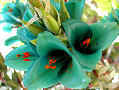
Germinating the seeds
When to plant -- Plant your seeds when you receive them for best results. Getting started -- You may plant each seed in individual, small containers,
such as
seedling starter trays For soil, use a well draining mix.
Personally i use a mix of 1 part
coir fiber Until the seeds sprout, ensure that the soil surface does not dry out. To maintain moisture it's usually best to enclose the pots in a plastic dome or bag. Leave it open a crack to allow fresh air in. You may need to drip some water on the soil every day or 2 to keep it moist. Keep the pots at about 65-75 degrees F (18-24°C). Avoid letting them get above 77°F (25°C) for prolonged
periods. I recommend placing a minimum/maximum thermometer Keep them in a bright spot, but not in direct sun. A fluorescent bulb kept 5 inches (12 cm) above the soil provides the right amount of light. The seeds should begin sprouting within 4 to 6 weeks, but allow up to 10 weeks for any slow ones to sprout, especially at cooler temperatures. Give your seedlings bright light, but avoid direct sunlight the first 4-6 weeks. A fluorescent lamp kept 4 inches (10 cm) away provides the right amount of light. I recommend growing them indoors the first few months. Watering - Once the seedlings are 3 weeks old, you may allow the soil surface to dry out, but keep the rest of the soil evenly moist (but not soggy). If your tap water is very high in minerals ("hard water") i recommend using bottled water or rain water. Repotting - When the plants are 2-3 months old, transplant them to a larger container. Transplant carefully to avoid letting the soil ball break apart, which can damage the roots. Watering the soil before repotting can help avoid this. For the first week after repotting, give no direct sun or liquid fertilizer. Fertilizing -- Feed weekly
with a very dilute (1/8 strength) liquid fertilizer.
Hydroponic fertilizer
is ideal for this, because it is easily absorbed and contains all essential
nutrients. I use
General Hydroponics Flora fertilizer It's normal for an older leaf to occasionally turn yellow and drop, but if it seems excessive, your plant may need more nitrogen fertilizer. It can also be from overly dry soil down in the root zone. Keep in mind that the leaves normally drop each winter if temperatures are cool enough. Sunlight -- The plant likes mostly-sunny conditions, but in warmer conditions, it's best to give it some afternoon shade. Climate - The plant is happiest in moderate temperatures and cool nights. It's possible that consistently hot temperatures may stress the plant, particularly if nights are warm. In warmer conditions, give the plants afternoon shade, and don't place them near a wall where heat can collect. Keep the pots shaded to avoid overheating the roots. If this is not possible, use an oversized pot. They should be protected from frost, although a mature plant can probably survive a few degrees of frost. Over about 40% humidity is best. If your plants seem to suffer from low humidity indoors, consider using an ultrasonic humidifier. Pruning - You can remove any lanky branches, to help keep the plant looking tidy. Avoid removing too many branches at one time. Pests to watch for - Look for any insects that tend to affect your other plants. Try using insecticidal soap before using stronger remedies, since some may harm the plant. If you have any questions, feel free to contact me. Have fun growing them! - Jeff Strange Wonderful Things
|
|||||||||

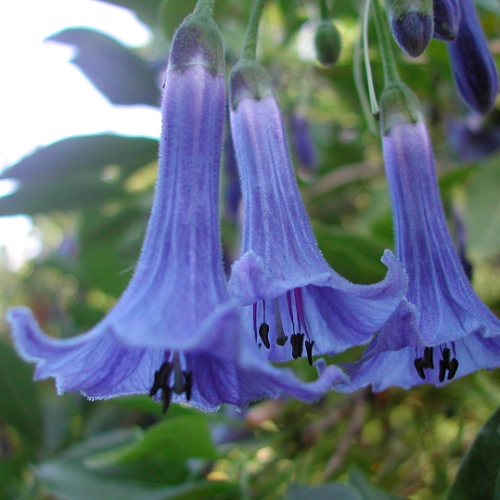
 . Or you plant them all in a single,
larger
container, but it may be difficult to separate the roots later. Either way, use
containers with drainage holes
. Or you plant them all in a single,
larger
container, but it may be difficult to separate the roots later. Either way, use
containers with drainage holes to 1 part
  (use fine- or medium-grade perlite, not coarse-grade). An alternate mix is 2 parts
  to 1 part perlite.
 near the pots,
especially if using a heating mat.
near the pots,
especially if using a heating mat. ,
using 1 teaspoon/gallon (5 mL per 4 liters). After 6-8 weeks, you may switch to a granular fertilizer
,
using 1 teaspoon/gallon (5 mL per 4 liters). After 6-8 weeks, you may switch to a granular fertilizer that contains micronutrients (I use