Growing tips
Soil -- Deppea likes
well-draining soil. I use a mix of 1 part
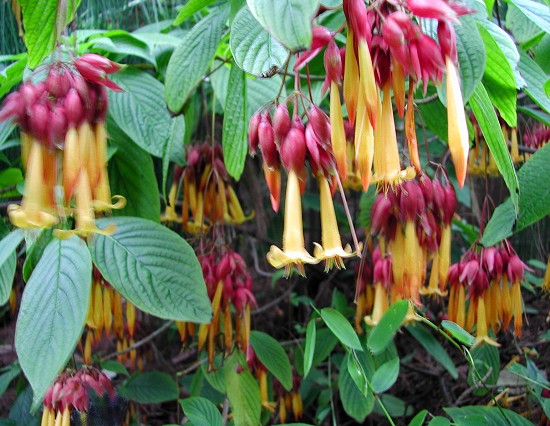
coir fiber Pot size -- Start your plant in a 1 gallon (4 liter) pot or thereabouts. After a few months, repot to a larger container, like a 3-5 gallon pot (20 liter), or into the ground if you're in a frost-free area. The final pot size is 5 to 20 gallons (20-75 liter), depending on how large you let it grow. Deppea is sensitive to root disturbances, so transplant gently, being careful not to let the soil ball break apart. Watering the soil before repotting helps keep the soil together. After transplanting, don't compress the soil down - simply water it. Climate -- Deppea prefers filtered sunlight. Morning sun + afternoon shade is fine, as well as tree-filtered sunlight all day. It prefers moderate temperatures. The ideal temperatures are between 55 and 85° F (12-29°C) during the day, and 45 to 65° F (7-18°C) at night. In warmer areas, give the plant afternoon shade, and keep the pot shaded to avoid overheating the roots. You may plant it in the ground in mild-winter areas, such as along the Pacific coast. Protect the plant from all frost. Humidity over about 40% is best. Watering - Deppea likes evenly moist soil, but it shouldn't be perpetually soggy either. If your water is very "hard" (high in minerals), you might need to use bottled water or rainwater if it shows signs of stress. Feeding - Deppea has average fertilizing needs. Feed about every 2 months with a general-purpose fertilizer that contains micronutrients. If some of the older leaves turn yellow and drop, this could be a sign that the soil is too dry down in the root zone. If you're certain the roots are moist, it may need more fertilizer (nitrogen). Deppea can occasionally drop some green, healthy-looking leaves for no apparent reason. This is usually due to an environmental change, like: temperature, soil moisture, lighting, repotting, humidity, insects, etc. Once conditions stabilize, the plant will soon sprout new growth. Insects to watch for -- Look for any insects that you find on your other houseplants. Try using insecticidal soap before using stronger remedies, since some may harm the plant. If you have any questions, feel free to email me. Have fun growing it! - Jeff Strange Wonderful Things
|
|||||||||
 to 1 part
 (use fine- or medium-grade perlite, not coarse-grade). An alternate mix is 2 parts
quality potting soil
(use fine- or medium-grade perlite, not coarse-grade). An alternate mix is 2 parts
quality potting soil to 1 part perlite
or coarse horticultural sand. You can mix in some granular fertilizer to
either mix. Choose one that contains micronutrients.
to 1 part perlite
or coarse horticultural sand. You can mix in some granular fertilizer to
either mix. Choose one that contains micronutrients.