| Home |
Strange Wonderful Things Rare and exotic plants |
 |
|---|
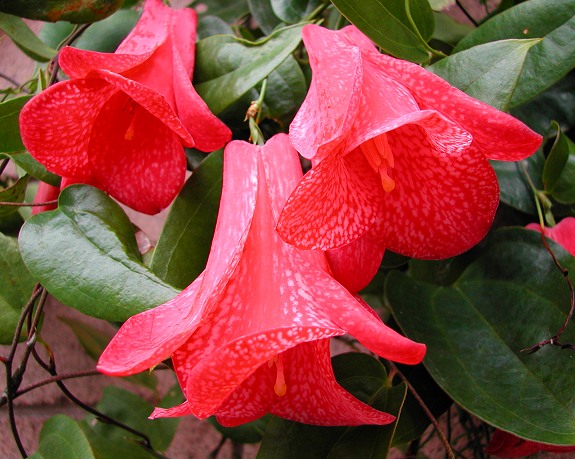
Chilean Bellflower
Soil -- Use a loose, well-draining soil mix. A typical mix is 1 part peat moss or coir fiber, 1 part perlite or coarse horticultural sand, and 1 part small orchid bark. An alternate mix is 2 parts potting soil, 1 part perlite or coarse sand, and 1 part small bark pieces. Don't add lime to the mix, since Lapageria likes acidic soil.
Watering -- Keep the soil evenly moist. Don't allow it to dry out, but avoid keeping it constantly soggy too.
If your tap water is very high in minerals ("hard" water), you might need to use bottled water or rain water.
Lighting -- Lapageria likes a few hours of direct sun, but it should be shaded from strong, hot sun.
Climate -- It prefers mild daytime temperatures and cool nights. It's happiest between about 40 and 80 degrees (5-27°C), and above freezing. Adult plants are reported to tolerate down to the low 20s (-5°C) if given overhead protection. But protect your seedlings from frost the first 3-4 years.
In warmer climates, keep the pot shaded so the roots stay cool. An easy way to do this is to place the pot inside a second pot made of clay.
Over about 40-50% humidity is best. If it seems to suffer in low humidity indoors, consider using an ultrasonic room humidifier, sold at home improvement stores and some thrift shops.
Fertilizing -- Lapageria is slow-growing and doesn't need lots of fertilizer. Feed about every 3 months with an all-purpose fertilizer that contains micronutrients. For smaller plants, i prefer to give a small amount of liquid Hydroponic fertilizer every 4-6 weeks, at 1/4 strength.
Transplanting -- Repot carefully to avoid disturbing the root mass. If the plant doesn't slide out, you might need to carefully cut the pot away.
Support -- Adult plants prefer to twist around a trellis, fence, wires, etc. Small seedlings shouldn't need support.
Pests to watch for -- Protect from snails and slugs, which love the leaves. Watch for any pests that affect your other plants.
If you have any questions, feel free to contact me.
Enjoy your plant!
- Jeff
Strange Wonderful Things
| Home |
Strange Wonderful Things Rare and exotic plants |
|
|---|---|---|
| Entire site Copyright 2003-2023 by Strange Wonderful Things, except as noted | ||