Strange Wonderful Things
Rare and exotic plants
| Home |
Strange Wonderful Things Rare and exotic plants |
|
|---|
|
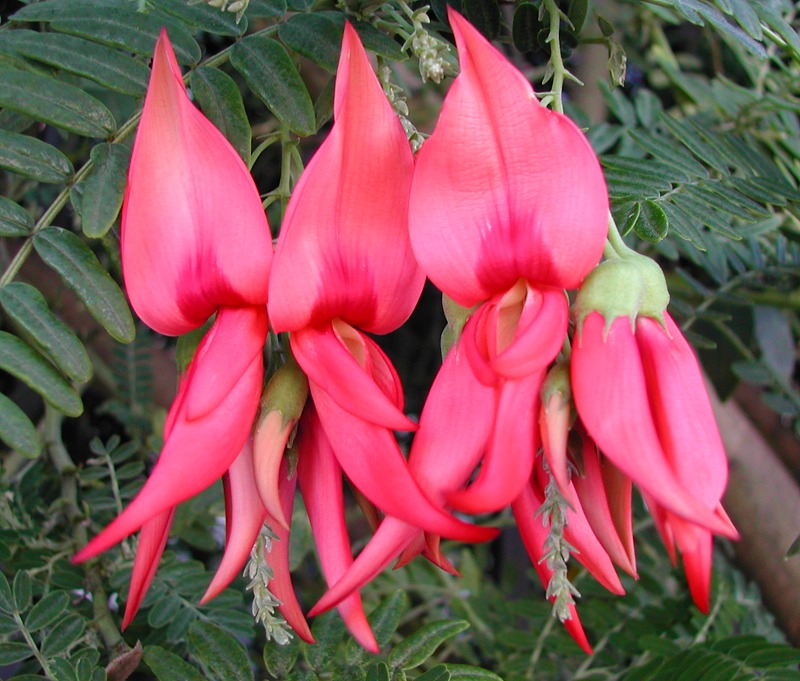
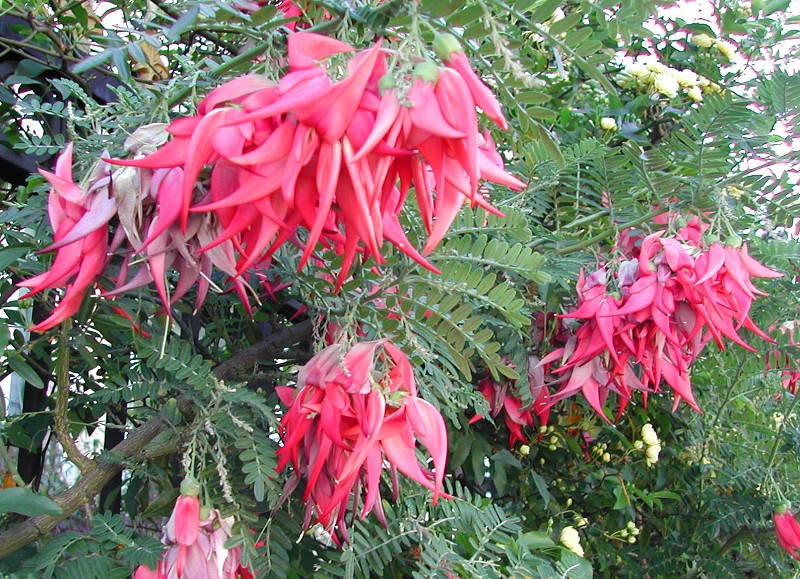
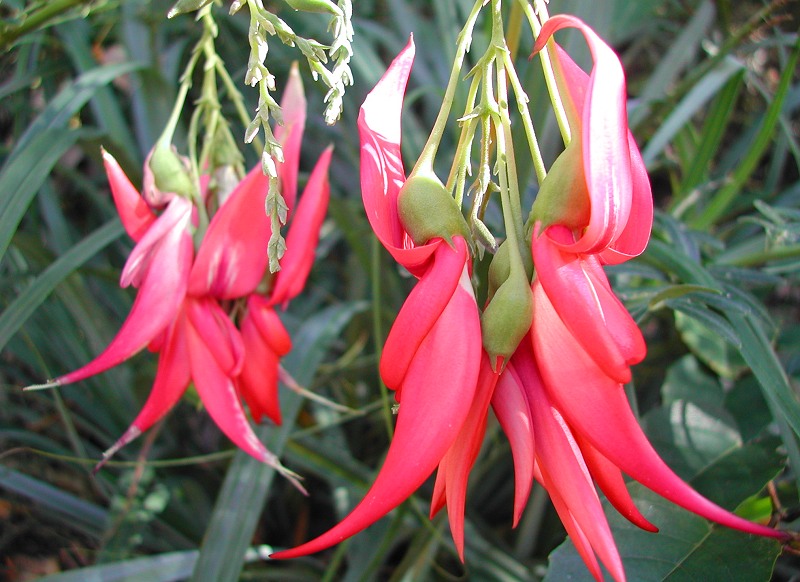
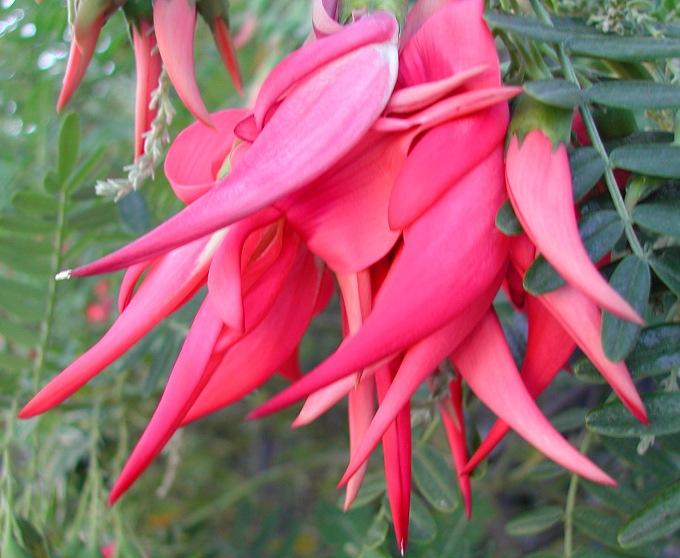
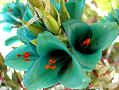
Parrot's Beak (Clianthus puniceus) puts on a spectacular show of exotic blooms that look like tropical bird bills! Throughout spring, it's covered with big, bright-pink blossoms that dangle like earrings from pretty, fern-like foliage. The plant attracts hummingbirds, as well as children, who like to feel the thick, waxy blooms resembling pink flamingos! Unfortunately the plant has recently gone extinct in its homeland of New Zealand.
Parrot's Beak is an evergreen bush with arching branches to about 3-4 feet long, although you can prune them shorter if you need to. The 3 inch blossoms appear in dense clusters of about 1 to 2 dozen blooms. They mostly appear in Spring, but can appear other times of the year too. The plant grows best with temperatures above freezing, although it reportedly can take a light frost. In colder areas, simply grow it in a pot and move it indoors for the winter. It prefers mostly sunny conditions, although some afternoon shade may be needed in warmer climates. It seems to be happiest below about 85 degrees (29°C) and might decline in consistently hot conditions, especially if nights are warm. Give it well-draining soil that's kept evenly moist. In the right conditions, it is easy and vigorous. Also see the red Clianthus maximus!
|
| Home |
Strange Wonderful Things Rare and exotic plants |
|
|---|---|---|
| Entire site Copyright 2003-2026 by Strange Wonderful Things, except as noted | ||